
Chapel Allerton Primary School
Geography

Geography: Intent,Impact and Implementation Statement
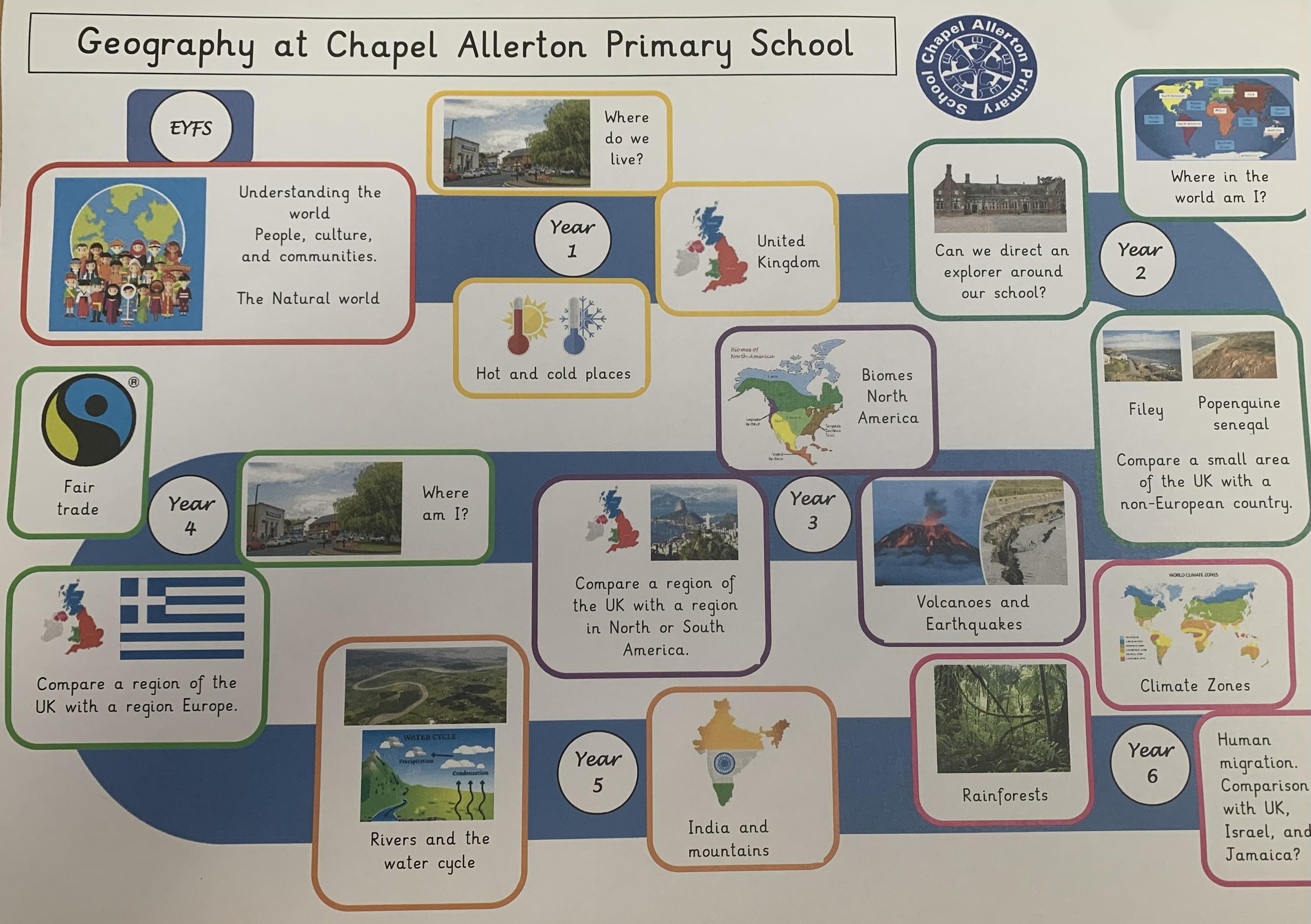
Fieldwork Long Term Plan
�� Geography Club 2024–25
Last academic year, we were busy exploring the world around us — starting in our own school grounds! We carried out exciting fieldwork activities to identify human and physical features, used our senses to rate different areas, and practised orienteering with a compass. We’ve also developed our own maps of the local area, using careful observation and data collection to make them as accurate as possible.
�� The Importance of Fieldwork
At Chapel Allerton Primary School, we believe fieldwork is at the heart of great geography learning. It allows our pupils to:
- Observe and explore the world first-hand
- Ask and answer meaningful geographical questions
- Collect, record, and analyse data
- Develop key mapping and enquiry skills
- Connect classroom learning with the real world
By taking part in fieldwork, our pupils build curiosity about their environment and a deeper understanding of the world around them.
�� Key Stage 1 Fieldwork Example
Our younger geographers (Y1/2) have been learning how to read a thermometer and record daily temperatures. In Year 2, pupils have been collecting and comparing temperature data each week to spot patterns and changes in the weather.
�� Key Stage 2 Fieldwork Example
In Y3, pupils have been studying biomes and exploring how different environments support a variety of plants and animals. A highlight of the term was a visit to Gledhow Valley Woods, where pupils investigated the characteristics of a temperate biome in real life and compared it to other biomes. They also conducted a rainfall investigation — collecting data in our school grounds and comparing their findings with rainfall data from another continent.


